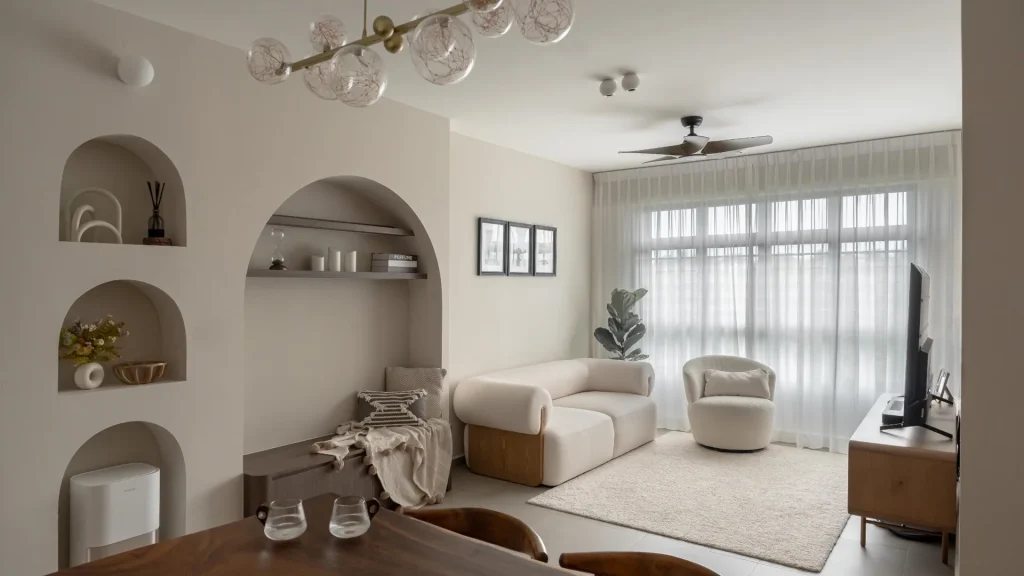
Key Takeaways:
- Start with how you want to feel. The best HDB toilet design decisions — from wall-hung toilets to layered lighting and recessed storage — all work together to create a space that feels calm, generous, and personal.
- Respect the regulations, then design freely. Work with a DRC-registered contractor, understand the 3-year BTO restriction, and factor in permit timelines — then let your style choices flow within those boundaries.
- Choose materials that age gracefully. In Singapore’s humid climate, moisture-resistant materials, proper waterproofing, and good ventilation are the foundation. Pick finishes you will love in ten years — warm neutrals, honest textures, and surfaces that patina beautifully.
Your HDB toilet is one of the hardest-working rooms in your house — and one of the smallest. Yet with thoughtful interior design, even a compact HDB bathroom can become a dream bathroom that greets you with calm every morning. At 6AM Spaces, we believe the best HDB toilet design starts not with tiles or fixtures, but with how you want to feel the moment you step inside. Warm light reflecting off soft stone, the quiet click of a wall-mounted cabinet closing — these small details shape your daily rhythm.
Singapore homeowners renovating HDB flats face a unique mix of tight layouts, strict regulations, and humid climate realities. But constraints can be a gift. When every centimetre counts, interior design decisions become sharper, more intentional, and personal — “every space is unique and reflective of every individual.”
At a Glance: HDB Toilet Design Essentials
A well-designed HDB toilet balances moisture-resistant materials, smart storage solutions, and layered lighting within a typical 3-to-6-square-metre layout. Wall-hung toilets and floating vanities free up floor space and reduce visual clutter, while light and neutral colours create the illusion of a larger space. All renovations must use HDB-registered contractors from the Directory of Renovation Contractors (DRC) and comply with HDB and BCA guidelines.
In this guide:
• Styles that work in Singapore HDB bathrooms — from warm minimalism to Japandi and industrial chic
• Space-saving fixtures: wall-hung toilets, floating vanities, and compact toilet bowls
• Material selection for Singapore’s humid climate
• Lighting layers that turn a small bathroom into a spa-like atmosphere
• Storage ideas that keep every surface clutter free
• HDB renovation regulations, permits, and timelines
• FAQs from real Singapore homeowners
What Makes Great HDB Toilet Design in Singapore?
Great toilet design is not about chasing the latest style — it is about creating a bathroom that works for your habits and feels right for years. In Singapore homes, that means choosing materials that handle constant dampness, arranging fixtures logically with sufficient clearance in front of toilets for optimal user flow, and layering design elements so the room feels spacious.
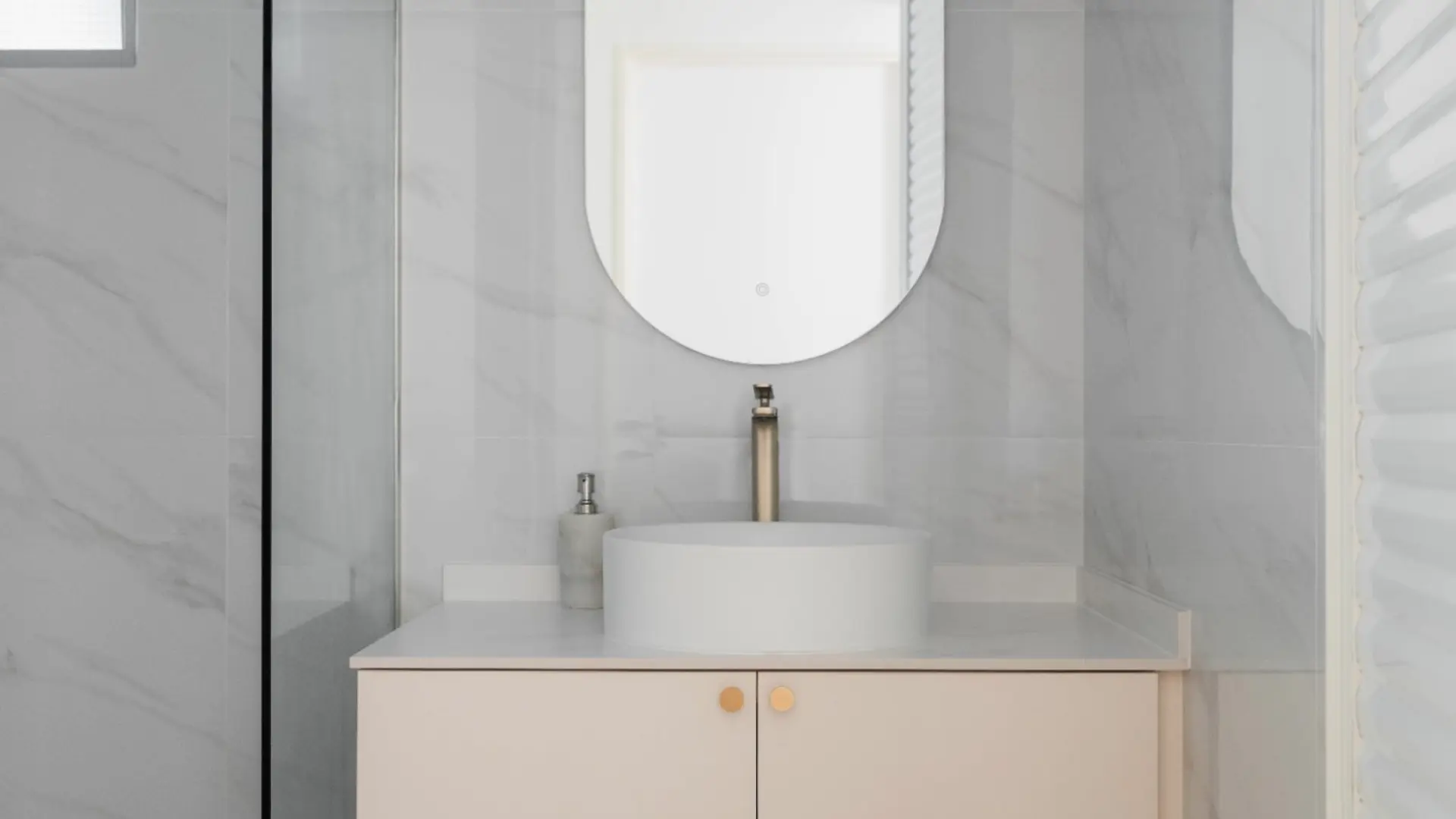
Think of it this way: a thoughtful bathroom design can create a soothing spot to rest after a stressful day. That might mean a rain shower under soft lighting, a floating vanity in muted cream with brushed gold hardware, or simply a layout where nothing feels crowded and morning routines flow without friction. A skilled interior designer helps translate those feelings into decisions about walls, floor finishes, and fixture placement.
Good Morning Tip (Layout): Position your shower area at the far end and your vanity nearest the door — this keeps the wet zone contained and gives you dry counter space first thing in the morning.
Defining “Warm Minimalism” for HDB Bathrooms
In 2026, popular HDB toilet design styles emphasise “Warm Minimalism” and “Midimalism,” which blend functional layouts with textured materials. Rather than cold, bare surfaces, warm minimalism pairs natural timber tones with durable neutral finishes, ambient lighting, and tactile textures — a space that feels calm at any hour, not a showflat frozen in time. Layering minimalist layouts with tactile textures is a key interior design trend for HDB bathrooms this year.
HDB Toilet Design Styles Worth Considering
Warm Minimalism and Japandi
Popular trends in HDB bathroom designs include neutral, monochromatic palettes, Japandi-style wood accents, and vertical storage solutions. Japandi style combines Japanese and Scandinavian elements, focusing on natural materials and a calming atmosphere — warm wood tones against clean walls, simple lines, and a restrained palette that lets materials breathe.
Large-format tiles reduce grout lines, creating a seamless look that amplifies the sense of space. Pair these with reclaimed wood shelving or a timber-topped vanity for warmth, and you have a bathroom that feels like a spa-like retreat. These ideas work particularly well in 4-room and 5-room HDB flats where the master bathroom offers a few extra centimetres to play with.
Hotel Style Bathroom Within HDB Constraints
A hotel style bathroom is more achievable than you think, even in a compact HDB flat. Marble or stone finishes elevate the luxury feel of an HDB toilet — combined with a frameless glass panel separating wet and dry areas, the result is a contemporary appearance that hotels are known for. Minimalist designs focus on clean lines and a restrained palette to enhance the sense of space in your house.
Industrial Style Bathrooms with Character
Industrial bathroom designs incorporate exposed pipes and raw materials to create an urban feel. In an HDB context, industrial chic works well as an accent — think a concrete-look feature wall behind the vanity, matte black tapware, and open shelving in black metal. It adds character without overwhelming a limited space. Remember: concealing pipes in the bathroom is allowed, but gas pipes in the kitchen must remain accessible.
Rustic Chic and Nature-Inspired Ideas
Rustic chic bathroom designs utilise raw materials like reclaimed wood and stone to create a natural aesthetic. In Singapore’s humid climate, choose materials carefully — sealed timber or timber-look porcelain for vanity tops, natural stone tiles with proper waterproofing underneath, and earth-tone colours that create contrast against lighter walls. Indoor plants and natural materials contribute to a tranquil atmosphere in HDB bathrooms.
Fixtures That Maximise Space in Small HDB Toilets
Wall-Hung Toilets and Compact Bowls
Wall-hung toilets free up floor space in small HDB toilets, making cleaning easier and reducing visual clutter. Compact, short-projection toilet bowls are ideal for small bathrooms as they maximise space efficiency. Smart toilets with automated flushing and heated seats are increasingly popular, and rimless designs offer superior hygiene. A modern toilet with a dual-flush system is essential for conservation — all new fittings must comply with the Mandatory Water Efficiency Labelling Scheme.
Floating Vanities That Breathe
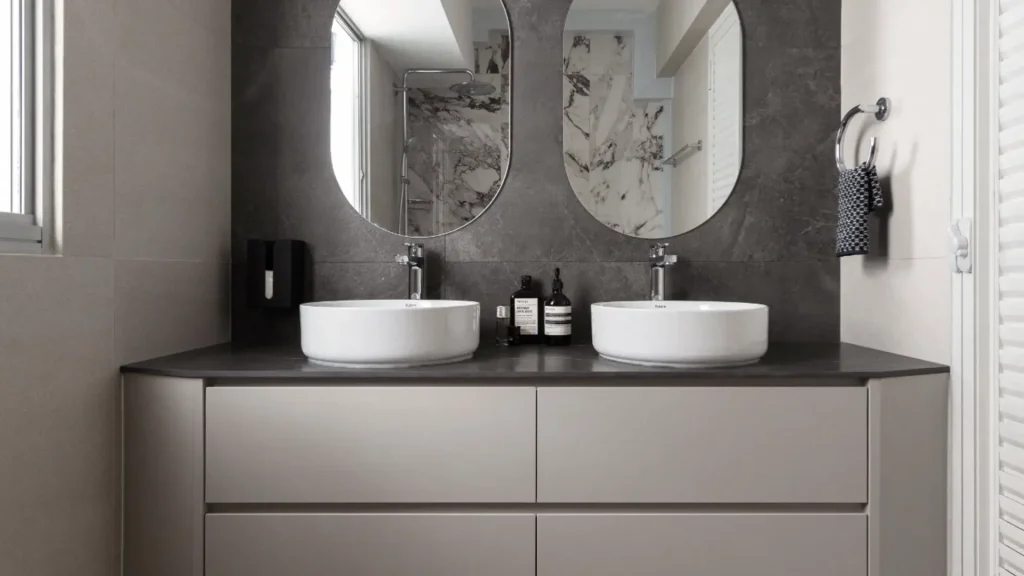
A floating vanity gives the eye a clear sightline to the floor, tricking the brain into perceiving more room. Using a floating vanity helps create an airy feel in small HDB toilets while providing storage beneath. In your own home, this simple interior design choice makes the single biggest visual difference.
Good Morning Tip (Storage): Opt for a vanity with internal dividers rather than open shelving — it keeps your morning essentials organised and the countertop clear, so the first thing you see is calm, not clutter.
Mirrors That Multiply Light
Large mirrors create the illusion of a more spacious bathroom by reflecting light. In a small bathroom, consider an oval mirror for a softer look, or a full-width mirror behind the vanity to double the visual depth. Patterned or textured tiles can add character to a small bathroom without overwhelming the space — especially when reflected in a mirror that turns the pattern into a focal point.
Material Selection for Singapore’s Humid Climate
Material selection is one of the most consequential decisions in any HDB toilet renovation. Choosing moisture-resistant materials is crucial for bathroom walls and floor surfaces due to constant dampness.
For walls, porcelain and ceramic tiles remain the workhorses — durable, easy to clean, and available in textures that mimic stone, timber, or concrete. Textured tiles add character while maintaining a luxurious feel, and colour-blocked walls in modern HDB toilets can create a playful atmosphere. Natural materials like sealed wood bring a calming spa-like atmosphere, but always ensure they are properly treated for Singapore’s conditions.
While a full-sized bathtub is rarely practical in standard HDB flats, the same attention to material honesty applies to every surface. Choose finishes you will still love in ten years — warm neutrals, honest textures, and durable surfaces that patina beautifully.
Lighting Ideas That Set the Mood
Incorporating layered lighting enhances both the mood and functionality of the bathroom. Start with warm-toned downlights (2700K–3000K) for ambient illumination. Add task lighting beside the mirror for grooming. Then add soft lighting accents: a warm LED strip beneath a vanity, or backlit mirror edges that glow gently at dawn.
Adequate lighting does not mean bright lighting. The goal is a brighter space that still feels calm — especially at 6 AM, when you want gentle warmth, not clinical glare.
A false ceiling can conceal wiring and create cove lighting. HDB and BCA require a minimum ceiling height of about 2.4 metres in habitable spaces, guiding how far you can drop a false ceiling or add feature bulkheads. Non-combustible and moisture-resistant materials are required for any false ceiling in the shower area.
Good Morning Tip (Lighting): Install a dimmable warm-white LED behind your mirror — at full brightness it is perfect for grooming, dimmed low it becomes a spa-like atmosphere for an evening soak.
Storage Ideas for HDB Bathrooms
Space-saving solutions like recessed niches and vertical shelving are important for maximising storage in small HDB toilets. Built-in cabinets and recessed shelves keep small bathrooms organised without taking up floor space. A recessed wall niche in the shower area stores toiletries at chest height — keeping the floor completely clear.
The goal: every item has a home, surfaces stay clear, and the room feels generous rather than cramped.
HDB Toilet Renovation: Process, Permits, and Timelines
Renovating a Housing and Development Board (HDB) flat’s toilet can be challenging due to specific regulations. Understanding these upfront saves time and stress.
Regulations You Must Know
HDB renovation guidelines prevent projects that could affect other residents or compromise structural integrity. Key rules for homeowners:
All renovations must be undertaken by registered contractors from the Directory of Renovation Contractors (DRC). Renovations in HDB flats must meet HDB/BCA guidelines to avoid fines or rework. The 3-year restriction prevents new BTO flat owners from hacking floor or wall tiles to protect waterproofing. HDB requires a 600mm × 600mm access opening if you box up sewage pipes. Non-combustible materials are required for false ceilings in shower areas.
An experienced interior designer navigates these rules while keeping your design ideas intact. Thoughtful interior design can transform even the most regulated space into something personal and beautiful.
Authority source: For renovation approval procedures, refer to the Housing & Development Board’s guidelines at hdb.gov.sg
Cost Expectations
Standard HDB toilet renovations range from $5,000 to $10,000, with premium packages between $10,390 and $18,990. Fixture costs alone typically fall between $1,500 and $5,000.
Process Summary
1. Consultation — Discuss lifestyle, habits, and design ideas with your designer
2. Concept — Layout, material selection, and fixture choices finalised
3. Permits — HDB renovation permit through your DRC-registered contractor
4. Hacking & waterproofing — Tiles removed (if permitted), waterproofing applied
5. Plumbing & electrical — Pipe rerouting, lighting points, exhaust fan
6. Tiling & carpentry — Wall and floor tiles laid, vanity and cabinets installed
7. Fixtures & styling — Toilet bowl, tapware, mirrors, accessories, and final touches
A typical HDB bathroom renovation takes 2–4 weeks. Carpentry lead times and tile availability are the most common bottlenecks in Singapore.
Bringing It All Together
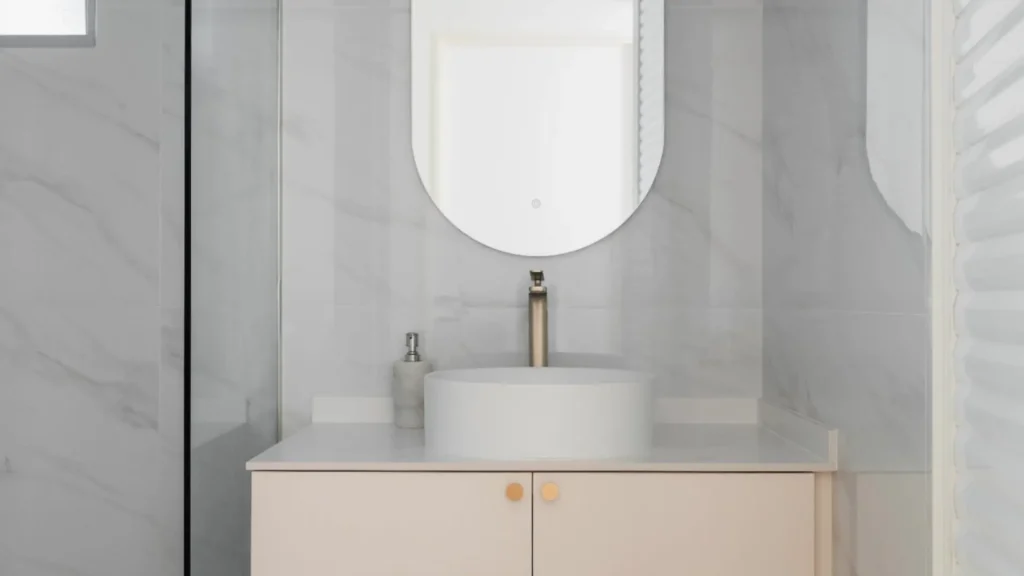
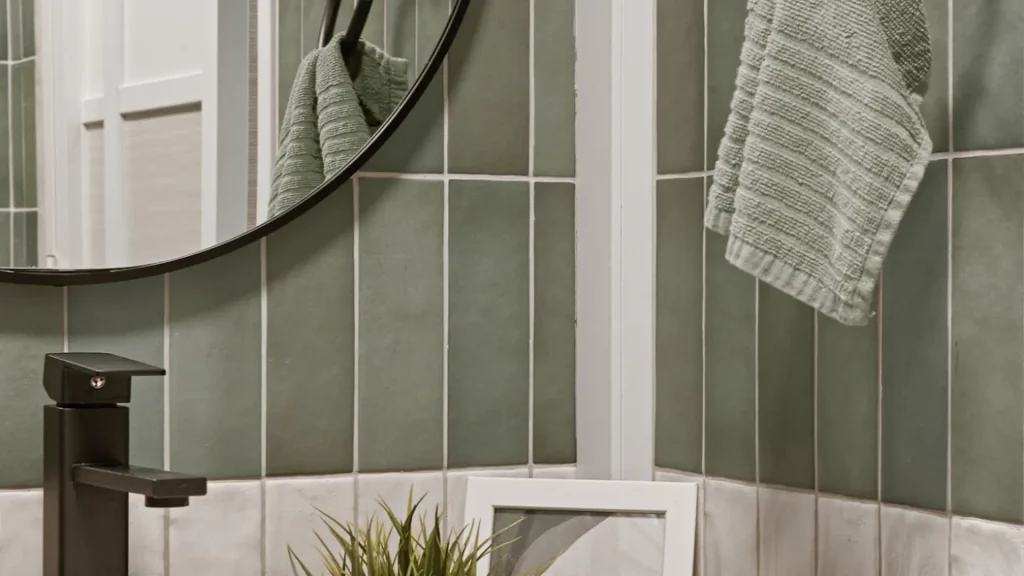
Light and neutral colours make a small bathroom feel fresh and bright — the single most reliable design idea for any HDB toilet. From there, layer personality: sage-green zellige tiles to create contrast, a brushed-gold tap, or a timber shelf that brings warm wood tones to an otherwise monochrome room.
Installing a clear glass shower stall instead of a curtain opens up the space. Typical HDB bathrooms are between 3 to 6 square metres, making every centimetre critical. But with the right layout, the right materials, and the right light, even the smallest bathroom in your house can feel like the most restorative room in your own home.
For more ideas on how thoughtful interior design transforms Singapore homes, explore our portfolio at 6amspaces.sg — where every project tells the story of an individual, not a template.
Frequently Asked Questions
How much does an HDB toilet renovation cost in Singapore?
Standard renovations range from $5,000 to $10,000, with premium packages up to $18,990. Fixture costs alone fall between $1,500 and $5,000, depending on your toilet design choices and material selection.
Are wall-hung toilets suitable for HDB bathrooms?
Wall-hung toilets are ideal — they free up floor space, simplify cleaning, and reduce visual clutter. Paired with compact toilet bowls, they maximise every centimetre in a small bathroom.
Can I hack tiles in my new BTO flat bathroom?
The 3-year restriction prevents new BTO owners from hacking floor or wall tiles to protect waterproofing. After three years, hacking is permitted with proper re-waterproofing by a DRC-registered contractor.
What materials work best for HDB bathroom walls and floors?
Choose moisture-resistant materials — porcelain tiles, ceramic tiles, and stone composites handle dampness well. Large-format tiles reduce grout lines, and textured options add character without overwhelming the room.
How do I make a small HDB toilet look bigger?
Neutral colours create the illusion of a bigger space, while large mirrors reflect light to amplify the effect. Wall-hung toilets and floating vanities open up the floor, and frameless glass shower panels maintain visual flow.
Do I need an HDB-registered contractor for bathroom renovation?
All renovations must be undertaken by contractors from the Directory of Renovation Contractors (DRC). This ensures work meets HDB and BCA guidelines — the Development Board takes compliance seriously.
Can I conceal sewage pipes in my HDB bathroom?
Concealing pipes is allowed, but you must maintain a 600mm × 600mm access opening for inspections. Gas pipes in the kitchen must remain accessible.