
Key Takeaways:
- Start with intention, not emptiness. Minimalism is not about removing everything — it is about keeping what truly serves your life. Declutter first, then build your design around the bare essentials that bring function and meaning to each room.
- Warmth is non-negotiable. Modern minimalist interior design succeeds when it feels inviting. Layer natural materials, warm neutral tones, soft lighting, and tactile textures to create a minimalist home that wraps you in calm — not one that leaves you cold.
- Design around how you live. A minimalist home should reflect your habits and rhythms, not a magazine spread. Personalised space planning, custom storage, and furniture that works for your daily routine are the foundations of a minimalist interior that lasts.
There is a quiet kind of beauty in a home that has just enough. In Singapore, where living spaces range from compact HDB flats to generous landed properties, minimalist interior design has become more than a style — it is a way of living with intention. It is about coming home to rooms that breathe, surfaces that invite touch, and light that moves gently across the walls as the day unfolds.
At 6AM Spaces, we approach every project with the belief that every space is unique and reflective of every individual. Our name evokes the quiet clarity of early morning — a time of possibility, fresh perspective, and the promise of a new day. That spirit of calm purpose shapes our minimalist interiors: warm timber tones, honest materials, soft ambient lighting, and a thoughtful layout designed around how you actually live. This is not about emptiness. It is about choosing the right elements to improve daily living, and letting go of the rest.
What Is Minimalist Interior Design?
Minimalist interior design is a style rooted in simplicity, clean lines, and intentional living. It prioritises function and form, focusing on fewer but higher-quality pieces, a neutral colour palette, smart storage solutions, and open layouts that maximise natural light. In Singapore homes, modern minimalist interior design blends warmth and comfort with a clutter free environment — creating spaces that feel calm, spacious, and deeply personal.
In Singapore-home terms, think of the minimalist interior design style as this: natural timber tones paired with durable neutral finishes, soft ambient lighting, and tactile textures — a space that feels calm and unhurried at any hour, not a showflat frozen in time. It is warm timelessness, brought to life through craftsmanship and personalisation.
In This Guide
1. The Art of Decluttering: Your Minimalist Foundation
2. Colour, Texture, and Material: Building a Neutral Palette with Soul
3. Open Spaces and Natural Light: Designing for Airiness
4. Functional Furniture and Smart Storage Solutions
5. Minimalist Decor and Accessories: Less, but Better
6. Room-by-Room Minimalist Interior Design Ideas
7. The Evolution of Minimalist Design
8. Process and Timelines for Your Minimalist Home in Singapore
9. FAQs
1. The Art of Decluttering: Your Minimalist Foundation
A clutter-free home is your first step toward achieving a minimalist aesthetic. Before any design choices are made — before paint colours or furniture — decluttering creates the breathing room that defines minimalist interiors. In a Singapore HDB or condo, where every square foot matters, thoughtful decluttering lets you make the most of your available square footage while ensuring a sophisticated and effortless aesthetic.
A minimalist home should consist of the bare essentials, requiring a willingness to let go of extras. This does not mean living with nothing; it means every item in a minimalist space must serve a purpose or bring value. To maintain a decluttered home, the “One-In, One-Out” rule is a practical daily habit: for every new item introduced, an old one goes. Over time, this small discipline transforms how your home feels — lighter, calmer, and unmistakably yours.
Minimalist homes prioritise quality over quantity, focusing on fewer, high-quality items. Investing in fewer but better pieces avoids visual clutter while maintaining a luxurious and curated feel in your home. This is especially powerful in smaller rooms and compact Singapore flats, where each object carries visual weight.
Good Morning Tip (Storage): Before your renovation begins, sort belongings into three groups: keep, donate, and store. Built-in cabinets and hidden compartments can then be sized to exactly what remains — no more, no less.
2. Colour, Texture, and Material: Building a Neutral Palette with Soul
Neutral colours create a calm and cohesive environment — the visual foundation of any minimalist interior design. A monochromatic colour scheme keeps a space unified, and monochrome schemes in white, grey, and beige shades offer a timeless look while making spaces appear larger and brighter. But a neutral palette need not feel flat or lifeless.
Layering textures can add warmth and depth to a neutral palette. Think of a cream linen sofa against plaster walls, an oak coffee table on a soft woven rug, or a stone countertop catching the morning light. Natural materials like wood, stone, and cotton add warmth to minimalist spaces without creating clutter. These are materials with soul — surfaces that age gracefully and feel better with time.
Adding accents can break monotony without overwhelming the minimalist vibe. Soft pastels or muted earth tones can add a touch of personality while keeping the palette refined. Using soft textures makes minimalist spaces more comfortable. Neutral flooring options — light oak vinyl, warm-toned tiles, or polished concrete — unify the home and support a calm atmosphere. The 6AM Spaces palette draws from warm white, cream, burnished gold, oakwood, and charcoal: tones that feel grounded and natural across different textures in every room.
Accent with minimal colour to add subtle colour accents in cushions, art, or small accessories. A single ceramic vase in a muted terracotta, a linen throw in dusty sage — these small details introduce visual interest without adding clutter.
Good Morning Tip (Material): Choose finishes you want to touch. A space that feels as good as it looks — a smooth timber grain, a cool stone surface, a nubby linen cushion — is the hallmark of warm minimalism done well.
3. Open Spaces and Natural Light: Designing for Airiness
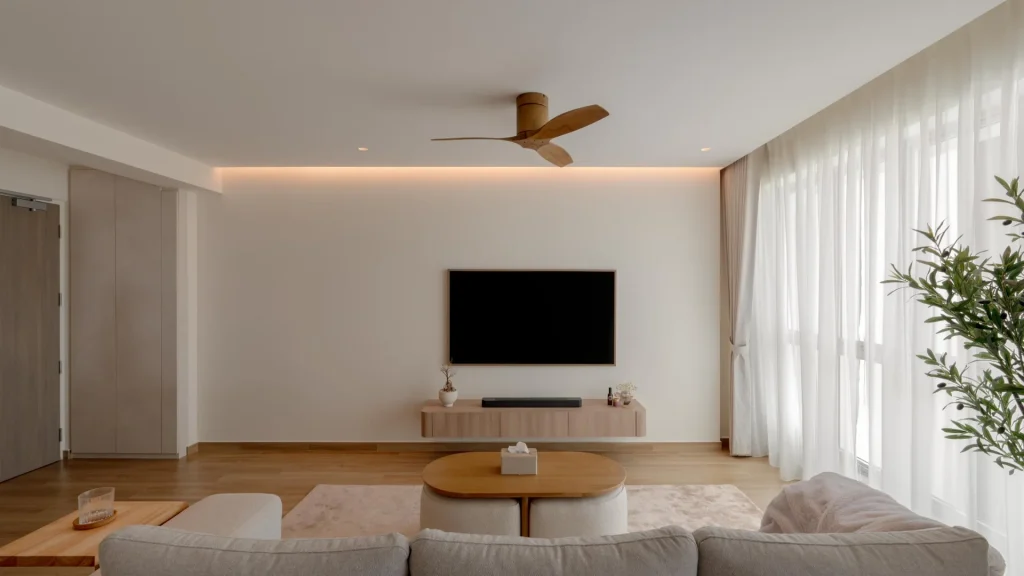
Natural light makes spaces feel open and welcoming. In minimalist interiors, light is not just practical — it is a design element. Maximising natural light enhances the airy, uncluttered feel that defines minimalism, and in Singapore’s tropical climate, the sun is a generous collaborator when your layout works with it.
Sheer curtains or blinds allow sunlight to flow in while maintaining privacy — a detail we consider in every 6AM Spaces project. Using mirrors can help reflect light throughout the room, especially in smaller rooms where a well-placed mirror doubles the sense of space. Neutral window treatments enhance light and air flow without distracting from the room’s clean lines.
Open spaces create a sense of freedom and calm. Open layouts enhance spaciousness with fewer partitions, allowing sight lines to run uninterrupted from the living room to the dining space. Strategic placement of items ensures flow in open spaces — a clear pathway, a breathing gap between furniture, negative space that gives the eye a place to rest. A well-lit minimalist home feels refreshing and open, like the first light of a new day.
4. Functional Furniture and Smart Storage Solutions
Minimalism prioritises function and form, which makes your furniture selection all the more crucial. Every piece of furniture should have a purpose to keep your home streamlined. In minimalist interiors, functional furniture avoids unnecessary decorative elements — its beauty comes from proportion, material honesty, and clean lines.
Multi-functional pieces save space and reduce clutter in minimalist homes. An extendable dining table serves intimate weeknight dinners and weekend gatherings alike. A bed frame with under bed storage keeps the minimalist bedroom tidy without requiring additional cabinetry. A kitchen island that doubles as a workspace maximises the function of minimalist kitchens without adding visual clutter.
Smart storage solutions are key in maintaining a minimalist home. Built-in storage solutions help maintain a clean look in minimalist interiors — full-height cabinets with handleless fronts, hidden compartments behind seamless panels, recessed shelving that tucks away daily essentials. The goal is storage that disappears: tidy spaces that feel effortless. At 6AM Spaces, our custom carpentry is designed around your specific belongings and habits, so nothing is built that is not needed.
Choosing quality over quantity in furniture selection is essential for a minimalist aesthetic. A single, well-crafted sofa in a neutral tone will serve you better than a room crowded with mismatched seating. This is the curated selection approach: fewer items, each one considered and purposeful.
5. Minimalist Decor and Accessories: Less, but Better
Minimalist decor prioritises quality over quantity, focusing on a few meaningful pieces that enhance the space. A statement decor piece — a single artwork or sculpture — can serve as a focal point in a minimalist design without overwhelming the room. It is about intentionality: every object earns its place.
Incorporating greenery, such as small potted plants, can add life to minimalist spaces while maintaining a clean aesthetic. A trailing pothos on a shelf, a sculptural fiddle-leaf fig in the corner — greenery introduces natural elements and softens the geometry of minimalist rooms.
Layering textures through textiles like rugs and cushions can add depth to a minimalist home while keeping the overall look simple. Different textures — a bouclé cushion against a leather armchair, a jute rug on polished concrete — keep the space from feeling flat. Ceramic vases, a timber tray, a woven basket: these small touches add visual interest without adding clutter.
Minimalist decor should enhance the space without dominating it, focusing on intentionality in every piece chosen. Using neutral colour palettes helps create a calm and cohesive environment across every minimalist room, allowing statement pieces to draw the eye naturally.
6. Room-by-Room Minimalist Interior Design Ideas
Minimalist Living Room
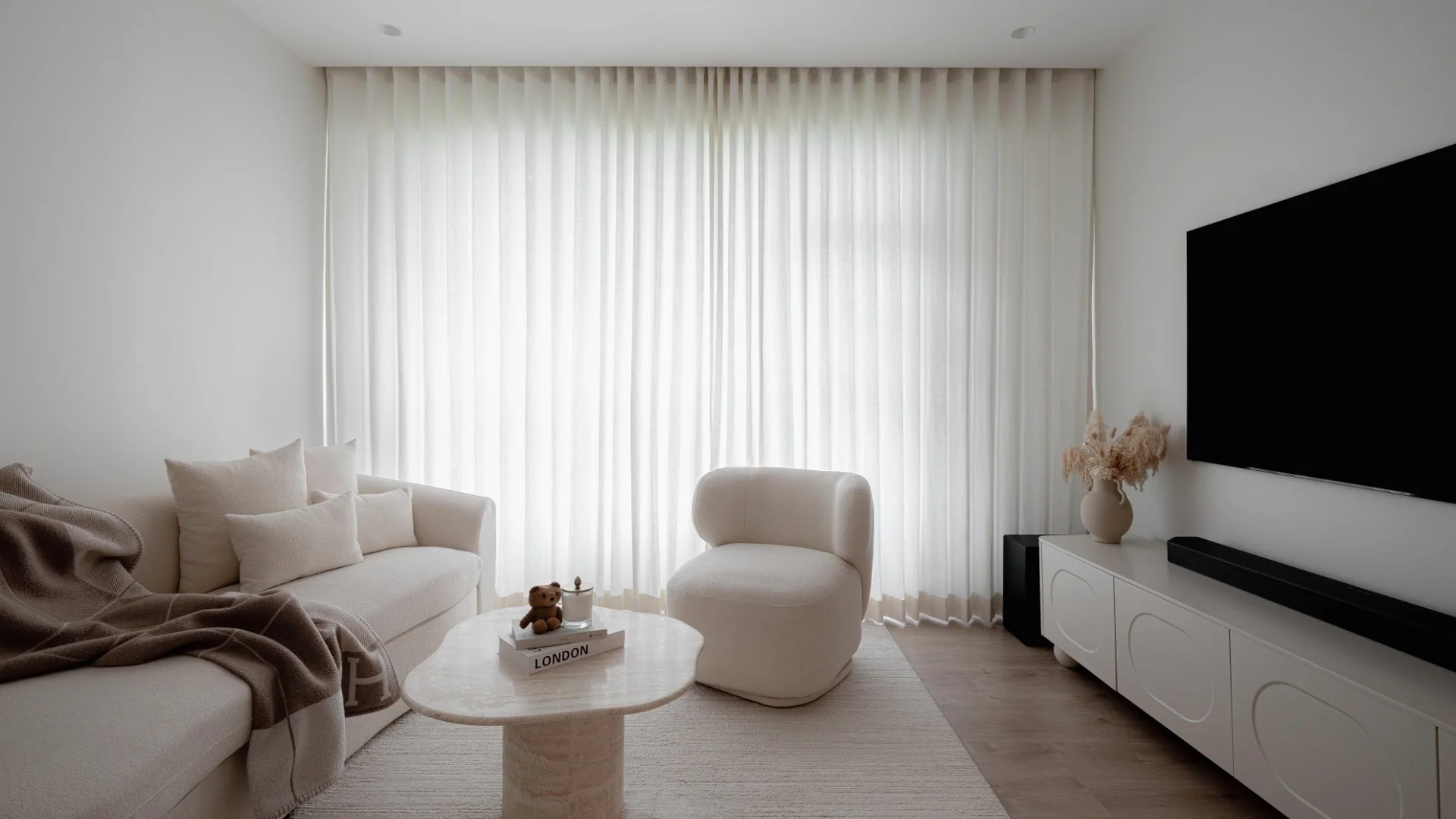
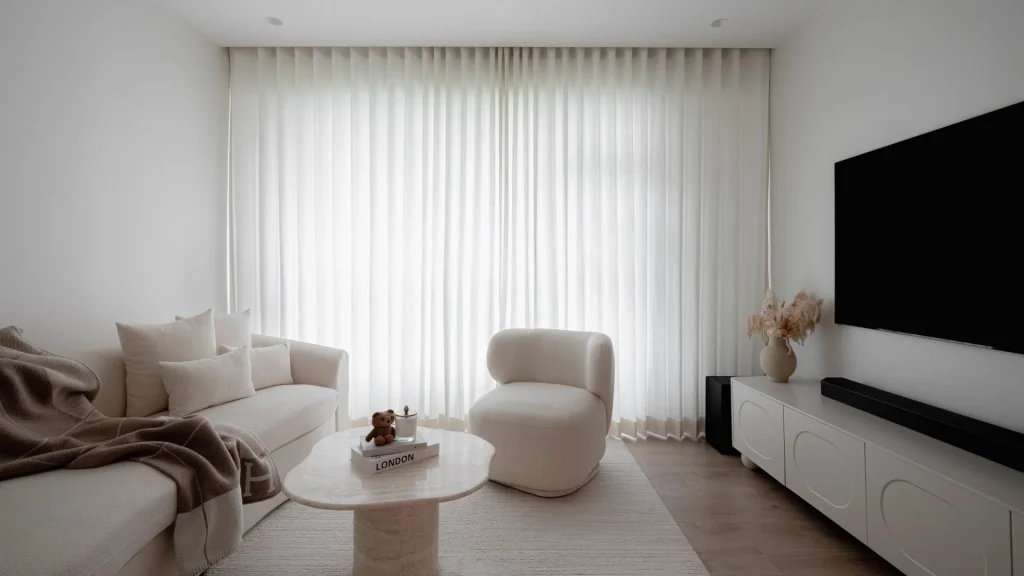
The living room is often the heart of a Singapore home and the room where minimalist interior design has its greatest impact. Keep the living room furniture to the essentials: a comfortable sofa, a coffee table with clean lines, a media console with hidden storage. Allow natural light to fill the space through sheer curtains. A neutral palette of warm whites and timber tones creates a living room that feels spacious and inviting, even in a compact HDB flat. Layering textures — a soft rug, linen cushions, a wool throw — adds warmth and depth to this living area without cluttering it.
See how we brought this sense of calm and simplicity to life in our portfolio of residential projects.
Minimalist Bedroom
A minimalist bedroom should be a serene escape — a room that invites rest. Choose a bed frame with clean lines and integrated under bed storage. Keep surfaces clear: a single bedside table, a reading lamp, perhaps a small plant. Neutral tones on the walls and bedding create a cocoon of calm. The well lit space in a minimalist bedroom comes from layered lighting: a warm overhead downlight, a bedside lamp for reading, and natural light softened by linen curtains. Keep the room free of visual clutter and it becomes a place you look forward to returning to each evening.
Minimalist Kitchen and Dining Space
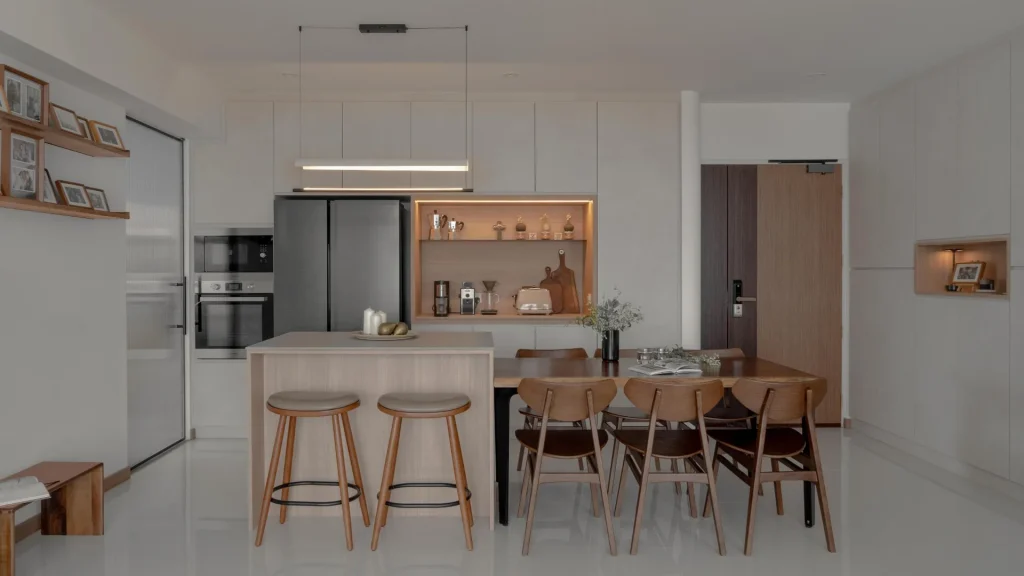
Minimalist kitchens are defined by handleless cabinetry, concealed appliances, and materials that are both beautiful and hardworking. A kitchen island with an integrated prep area and seating becomes the anchor of the room. Hidden compartments keep countertops clear, while open shelving for a curated selection of everyday items adds personality without adding clutter. In the dining space, an extendable dining table paired with timber chairs keeps things simple and adaptable. The key is a balance between a stylish home and a functional one — a kitchen that looks calm even when you are cooking for six.
7. The Evolution of Minimalist Design: From Stark to Warm
The minimalist design movement in Western culture finds its modern footing in the early 20th century, particularly with the Bauhaus movement, which emphasised materiality and texture alongside function. Traditional Japanese design has a direct correlation with minimalism, showcasing simplicity, restraint, and a deep appreciation for natural materials — principles that continue to shape how we design today.
Minimalist design today focuses less on extreme reduction and more on usability, functionality, and adaptability. The notion of warm minimalism is a notable change in the 21st century, contrasting with the stark minimalism of the past. Natural and nubby textures, along with earthy, tonal paint colours, create an airy feeling while adding warmth to minimalist design. This is the approach we embrace at 6AM Spaces: modern minimalist interior design that promotes a sense of calm and order, making homes feel more spacious and inviting.
Minimalism has evolved to include elements that add warmth and comfort, moving away from the cold, sterile environments of the past. The evolution of minimalist design reflects a blend of simplicity and comfort, aiming to create spaces that are both functional and inviting. The trend of warm minimalism combines clean lines with cozy textures and warmer neutrals to create a welcoming atmosphere — the very philosophy behind every 6AM Spaces project.
8. Process and Timelines for Your Minimalist Home in Singapore
Designing a minimalist home in Singapore involves practical realities alongside creative vision. Here is an honest overview of what to expect when working with an interior design studio like 6AM Spaces.
The 6AM Process
1. Consultation — We learn how you live: your habits, rhythms, and what home means to you.
2. Concept Development — Space planning, material selection, and mood boards tailored to your minimalist vision.
3. Design Detailing — Custom carpentry drawings, lighting plans, and finish specifications.
4. Carpentry and Installation — On-site coordination, quality checks, and material procurement.
5. Styling and Handover — Final touches, accessory placement, and a walkthrough of your new space.
Timeline Realities
For HDB renovations, homeowners must apply for an HDB renovation permit before any hacking or structural work begins. This process typically takes around three weeks for approval. Condo renovations require MCST approval, which may add additional time depending on management rules and work-hour restrictions.
Custom carpentry is typically the longest lead-time item, often requiring four to six weeks for fabrication. Common bottlenecks include material shipping delays, sequential trade scheduling (electrical before carpentry, carpentry before painting), and permit processing. A typical minimalist home renovation in Singapore runs eight to twelve weeks from design confirmation to handover.
Good Morning Tip (Lighting): Plan your lighting scenes early — ambient, task, and accent layers — so that electrical points are set before walls are closed. A warm colour temperature (2700K–3000K) suits minimalist interiors beautifully and makes neutral tones glow.
Ready to Begin Your Minimalist Journey?
Every 6AM Spaces project starts with a conversation — about who you are, how you live, and what home means to you. No templates, no pressure. Just the quiet clarity of a fresh perspective, and the promise of a space designed entirely around you.
9. Frequently Asked Questions
How do I start with minimalist interior design in my Singapore HDB?
Begin by decluttering thoroughly, then focus on a neutral colour palette and functional furniture. Smart storage solutions like built-in cabinets keep your HDB feeling spacious. Work with a designer who personalises the layout around your daily habits — not a template.
Is minimalist interior design suitable for small spaces?
Minimalist interiors are ideal for small spaces. By reducing visual clutter, choosing multi-functional pieces, and maximising natural light, even compact rooms feel open and generous. Clean lines and neutral tones make smaller rooms appear larger.
What is warm minimalism?
Warm minimalism blends clean lines with tactile, organic materials — think timber, linen, stone, and soft ambient lighting. It replaces the stark, cold aesthetic of earlier minimalism with a sense of comfort and belonging. Your space feels calm, not clinical.
How long does a minimalist renovation take in Singapore?
A typical minimalist home renovation takes eight to twelve weeks, depending on scope. HDB permit approval adds about three weeks. Custom carpentry is often the longest lead time. Work with your designer early to set realistic expectations and sequence trades efficiently.
Can minimalist design feel cosy?
Layering different textures, incorporating natural elements like wood and greenery, and using warm lighting create a minimalist home that feels deeply inviting. The key is intentionality: fewer items, but each one contributing warmth and beauty to the space.
What is the “One-In, One-Out” rule?
It is a simple habit: for every new item you bring into your home, remove an old one. Over time, this prevents accumulation and keeps your minimalist aesthetic intact without the need for periodic big declutters.


